

Building Belonging: Reaching Students with Learning Differences
by Lauren Rosenfeld
Twenty-four years. That’s a lot of 504 intervention plans, a lot of IEP meetings, and even more shifts in perspective. Counselors are more than just facilitators; you are the lead designers of the school environment. You have the unique power to ensure students with learning differences don't just get by, but actually feel they belong. You have the power to turn a learning difference from a disability into a different ability. But that doesn’t happen through filling out forms; it happens through mentorship. Let’s look at how we can stop just managing our students and start helping them truly belong. This guide provides a practical framework for shifting from clinical administration to high-impact mentorship. You’ll find specific strategies to reframe fixed-mindset language, actionable ways to build low-pressure social spaces, and collaborative tools that give students a genuine voice in their own support plans.
Compliance vs. Connection: Giving Students a Seat at the Table

We’ve all been there: staring at a 504 template at 4:00 PM, trying to check the right boxes before the day ends. But in my experience, compliance is just the floor; connection is the ceiling. When we shift into a mentor mindset, we realize our job isn't just to fix a schedule or satisfy a mandate—it’s to help a student decode their own unique blueprint. We aren't just adjusting a seat in a classroom; we are helping a student claim their place in it.
Things we can do:
Strategy-Host a Pre-Conference Conversation: Before you type a single word on that official form, pull the student aside for a low-stakes conversation. Ask: "If you were the architect of a classroom that didn't stress you out, what would it look like? Where would you sit? How would the teacher give you instructions?" This flips the script from the student being a case to be managed to a consultant on their own education.
The Mentor Move- Offering a Menu, Not a Prescription: Give them a genuine voice in their support. Instead of simply assigning a laptop for notes because it’s a standard accommodation, offer a choice. Ask: "Do you feel more in control when you type, or does a guided outline help your brain stay on track?" When a student chooses their tool, they are much more likely to actually use it.
The Barrier-Free Audit: If a student isn’t using their accommodations, don't view it as non-compliance. Use your veteran intuition to dig deeper. Often, they’re just trying to avoid being noticed. Ask: "How can we make this support feel like a seamless part of your day, rather than something that stands out?"
The Strengths-First Inclusion: Add a section to your personal notes (and the plan where possible) that highlights the student’s strengths. Explicitly document where they shine. It reminds the teachers—and the student—that these supports exist to clear the path for their specific talents.
How We Can Communicate: "We're putting this plan together to make sure the classroom setting matches the way your brain works best. You’re the expert on your own learning style—I’m just here to help you make sure the environment catches up to your potential."
The Power of the Pivot: Watching Our Language
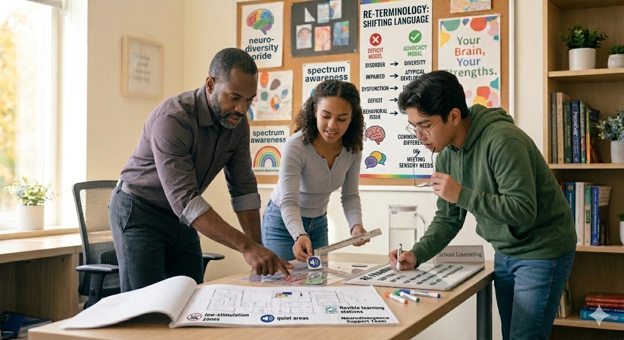
After all these years, I’ve realized that the labels we use in meetings to describe our students eventually becomes the way a student describes themselves. If we use labels that sound like character flaws, we shouldn't be surprised when students feel discouraged. To create a sense of belonging, we need to swap deficit talk for language that focuses on how a student actually processes information.
Things we can do:
Strategy: The Reframing Audit. Before finalizing a report or sending an email, review your draft for fixed-mindset terminology. Identify any language that suggests a student’s struggles are permanent character traits and replace it with growth-oriented descriptors that highlight skills currently in development.
The Mentor Move: Model the Change. You set the tone for the building. When a teacher calls a student "lazy" in a meeting, be the person who reframes it as a "struggle with getting started." By changing the word, you give the teacher a practical problem to solve rather than a personality trait to be frustrated by.
Expansion: Ask the Student. Some students are proud of their specific neurodivergence, while others prefer not to lead with a label. A quick, "How do you like to talk about your learning style?" goes a long way. It gives them control over their own story.
Creating Social Safety Nets (Without the Awkwardness)
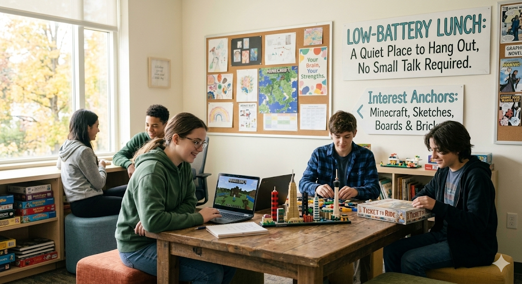
Secondary school can feel like a social minefield for students with learning differences. Too often, the standard response is to fix the issue with social skills classes that feel like just another lecture on what the student is doing wrong. What these students actually need isn't a lesson on eye contact; they need a space where the social volume is turned down so they can actually breathe and be themselves. By shifting from a clinical approach to a mentorship model, we can build environments that foster natural interaction rather than forced performance.
Things we can do:
Strategy- Establish "Parallel Play" Zones: To help create a place for students to connect, we can borrow a concept from early childhood and adapt it for teens. Create niche areas in your office or other school spaces—think Lego architecture, a shared sketchbook, a strategy board game, or a coding corner. These provide a natural anchor for students who want to be around others but find direct conversation overwhelming.
The Mentor Move: The "Side-by-Side" Approach. Direct, face-to-face interaction can feel like an interrogation to a neurodivergent student. It is much easier to form a bond when two people are looking at a shared task—like a puzzle or a screen—rather than at each other. By facilitating these shared activities, you remove the performance aspect of friendship.
Interest-Based Anchors: Instead of grouping students by their disability category, group them by their passions. A graphic novel think-tank or a Minecraft strategy hour creates a social safety net built on shared expertise. It shifts the dynamic from we are here because we struggle to we are here because we are fans.
Usable Language: "I’m hosting a low-battery lunch in my office on Thursdays. It’s a low-pressure space, no forced small talk required, just a quiet place to hang out and work on your own projects alongside some other people."
Helping Students Find a Voice: The Self-Advocacy Shift
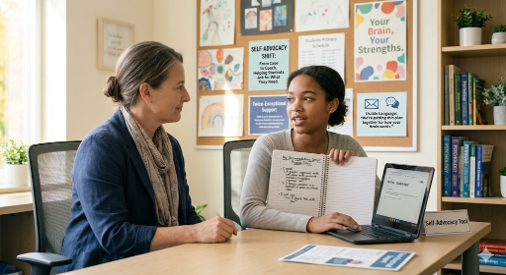
True success for a student with learning differences isn't just about getting through the day; it’s about them learning how to ask for what they need long after they leave our offices. We need to move from being their protector to being their coach.
Things we can do:
Strategy-The Scripting Workshop: Self-advocacy is a muscle that needs training. Many students want to ask for help but literally don't have the words. Help them draft a teacher memo or a 30-second script for when they feel overwhelmed in class.
The Mentor Move-Practice Low-Stakes Advocacy: Before they have to advocate in a high-pressure meeting, let them practice with you. Ask them to pitch a change to their 504 or IEP plan. This gives them a sense of agency and teaches them that their voice carries weight in their own education.
Normalizing the Tool: Encourage students to see their accommodations as professional tools, not cheating. Just as a graphic designer uses a stylus or an accountant uses a spreadsheet, a student uses a graphic organizer or a quiet testing space to do their best work.
Usable Language: Help work with your students to advocate for themselves. Have conversations where you tell them, “Instead of me telling your teacher what you need, how about we draft an email together? You tell me the how and why, and we’ll make sure your voice is the one they hear."
Supporting the Twice-Exceptional (2e) Student: The Great Chameleon
The twice-exceptional (2e) student—those who are both gifted and neurodivergent—often presents a unique challenge. In my experience, these students are frequently the most misunderstood in our buildings because their high intelligence masks their struggles, while their struggles often hide their brilliance. Because they don't fit into a standard box, they often require the highest level of tailored support, yet many educators feel ill-equipped to provide it, leaving these students to navigate a frustrating gap between their potential and their daily reality.
Things we can do:
Strategy-The Strength-Lead Accommodation: For 2e students, traditional accommodations can sometimes feel patronizing. Instead, lead with their strengths. If a student is a brilliant historian but struggles with handwriting, don't just give them a laptop; frame it as a way to ensure their ideas aren't slowed down by the mechanical side of writing.
The Mentor Move-Address the Asynchronous Gap: 2e students often feel like they are smart and failing at the same time. Help them understand that their brain is developing on two different tracks. Validating that it’s frustrating to have a college-level vocabulary but middle-school organizational skills can lower their internal shame.
Usable Language: "You have an incredible capacity for complex thinking, but the systems to organize and output those thoughts are still catching up. These supports act as a bridge, ensuring your results match your true potential."
After twenty-four years, I am still convinced that a counselor’s most powerful tool isn’t a spreadsheet or a legal mandate—it’s the intentionality of the relationship. When we audit our language, build genuine social safety nets, and foster an ownership over self-advocacy, we move past the paperwork and into the heart of why we do this work. We aren't just adjusting a student’s school year; we are shifting their entire trajectory from a guest in the building to a child who finally knows they belong.
